Essential Mineral Your Body Needs!
I’ll never forget early this year when my wife and I realized how important iron really is. She was experiencing extreme fatigue, dizziness, and bed driven. Turns out, her iron levels were almost nonexistent. And she wasn’t alone. According to the WHO, more than 25% of the global population struggles with iron deficiency anemia. That’s over 2 billion people!
Iron might be small on the nutrition label, but it’s a powerhouse in your body. It fuels your energy, keeps your mind sharp, and helps your immune system fight off colds like a champ. Without enough iron, your cells can’t carry oxygen efficiently and that’s when fatigue, brain fog, and low mood creep in.
So in this post, I’m breaking down why you need iron in your diet, how to spot the warning signs, and the best ways to get enough without turning every meal into a science experiment. Let’s dig in!
What Is Iron and Why Does Your Body Need It?
When I first learned about iron, I pictured metal. Not wrong, but in our bodies, it’s way more exciting than that! Iron is the key part in hemoglobin. Think of hemoglobin as the oxygen delivery truck inside your red blood cells that picks up oxygen from your lungs and delivers it all over your body. Every breath you take, every heartbeat, every bit of energy you feel – iron is behind it.
There are two main types: heme iron (from animal foods like beef or chicken) and non-heme iron (from plants like spinach, lentils, and tofu). Heme iron absorbs faster, but non-heme can still do wonders — especially when you pair it with vitamin C. I used to squeeze lemon juice over my lentils just for flavor, but now I know it actually boosts absorption!
When your body doesn’t get enough iron, your oxygen transport slows down. That’s when fatigue, weakness, and even trouble focusing start showing up. It’s wild how something so tiny can control your whole energy system.
Signs and Symptoms of Iron Deficiency
My wife didn’t realize she was iron deficient until she was bed driven when not sitting down through out the day. Common signs include constant tiredness, pale skin, dizziness, brittle nails, and even headaches.
One weird symptom? Craving ice. Yep, some people with low iron actually chew ice (it’s called pagophagia).
If you suspect low iron, get a blood test for ferritin levels — that’s the storage form of iron. Don’t just guess and start popping supplements. Too much iron can cause stomach cramps and constipation. Let your doctor guide you.
Health Benefits of Getting Enough Iron
When your iron levels bounce back, the difference is night and day. She remembers waking up one morning and actually feeling awake. It was like she had a new battery installed.
Iron supports energy production by helping hemoglobin deliver oxygen efficiently. It’s also vital for your immune system, helping you fight off infections faster. Your hormones and metabolism rely on it too. That’s why women with heavy cycles often feel drained when their iron drops.
And here’s something many don’t know: iron even plays a role in brain function. Low iron can tank your focus, memory, and mood. When I finally got my levels up, my productivity and creativity skyrocketed. It’s truly a performance mineral.
Best Iron-Rich Foods to Add to Your Diet
The best part about improving your iron intake? You don’t need fancy supplements or exotic ingredients. Start small — swapping breakfast cereal for oatmeal topped with pumpkin seeds and raisins.
Here are some iron-rich foods:
- Heme sources: clams, beef liver, chicken thighs, and turkey.
- Non-heme sources: lentils, chickpeas, spinach, tofu, quinoa, and blackstrap molasses.
Pro tip: pair these with vitamin C-rich foods like bell peppers, citrus, or strawberries to help your body absorb more iron. I’ll even toss orange slices into a spinach salad — it’s delicious and effective.
Also, avoid coffee or tea right after eating. The tannins can block absorption (something I wish I’d known sooner — we typically drank 40 to 80 oz of tea).
How Much Iron Do You Really Need Daily?
The amount of iron you need depends on your age and gender. Most adult men need about 8 mg per day, while women (especially premenopausal) need around 18 mg. Pregnant women? They need roughly 27 mg daily. For more information click here.
If you’re an athlete or heavy sweater, you might need a bit more. All those long runs drained my iron stores fast.
But here’s the thing: too much iron isn’t better. It can build up and damage organs. Always get your blood checked before taking supplements. Balance is the key. Your body knows what it needs.
Iron Supplements — When and How to Use Them
In most times, taking iron supplements can correct iron deficiency. There are plenty of choices over the counter. However, if you’re one of those people who has trouble digesting iron supplements, like my wife, iron injections might be an option for you in emergency situation. She received three injections over period of three weeks at the hospital.
Always take iron supplements with food (and vitamin C if possible). Never with milk or caffeine — they interfere with absorption.
And please, talk to a doctor first. Iron overload can be just as dangerous as deficiency. Some people even have conditions like hemochromatosis where their body stores too much iron naturally.
How to Improve Iron Absorption Naturally
Here’s where food strategy really matters. Simple tweaks can make a huge difference:
- Pair iron with vitamin C — think lentils + lemon juice, or beef + bell peppers.
- Avoid coffee, tea, or calcium-heavy foods for an hour after meals.
- Cook in cast iron pans — it actually adds trace amounts of iron to your food!
- Keep your gut healthy — iron absorption happens in the small intestine, so probiotics and fiber help.
Conclusion
Iron might not get the spotlight like protein or carbs, but it’s the silent hero behind your energy, focus, and resilience. We learned that hard-way. Now, we try to include plenty of iron-rich foods in our diet to prevent future visits to the hospital.
Whether you’re eating more lentils, trying a new supplement, or just cooking with a cast iron pan, every little habit counts. Your body can’t thrive without enough oxygen, and iron is the key to unlocking that power.
So next time you plan a meal, give a little nod to this mighty mineral because when your iron levels are steady, your energy, mood, and motivation soar right with them.
Ingredients
-
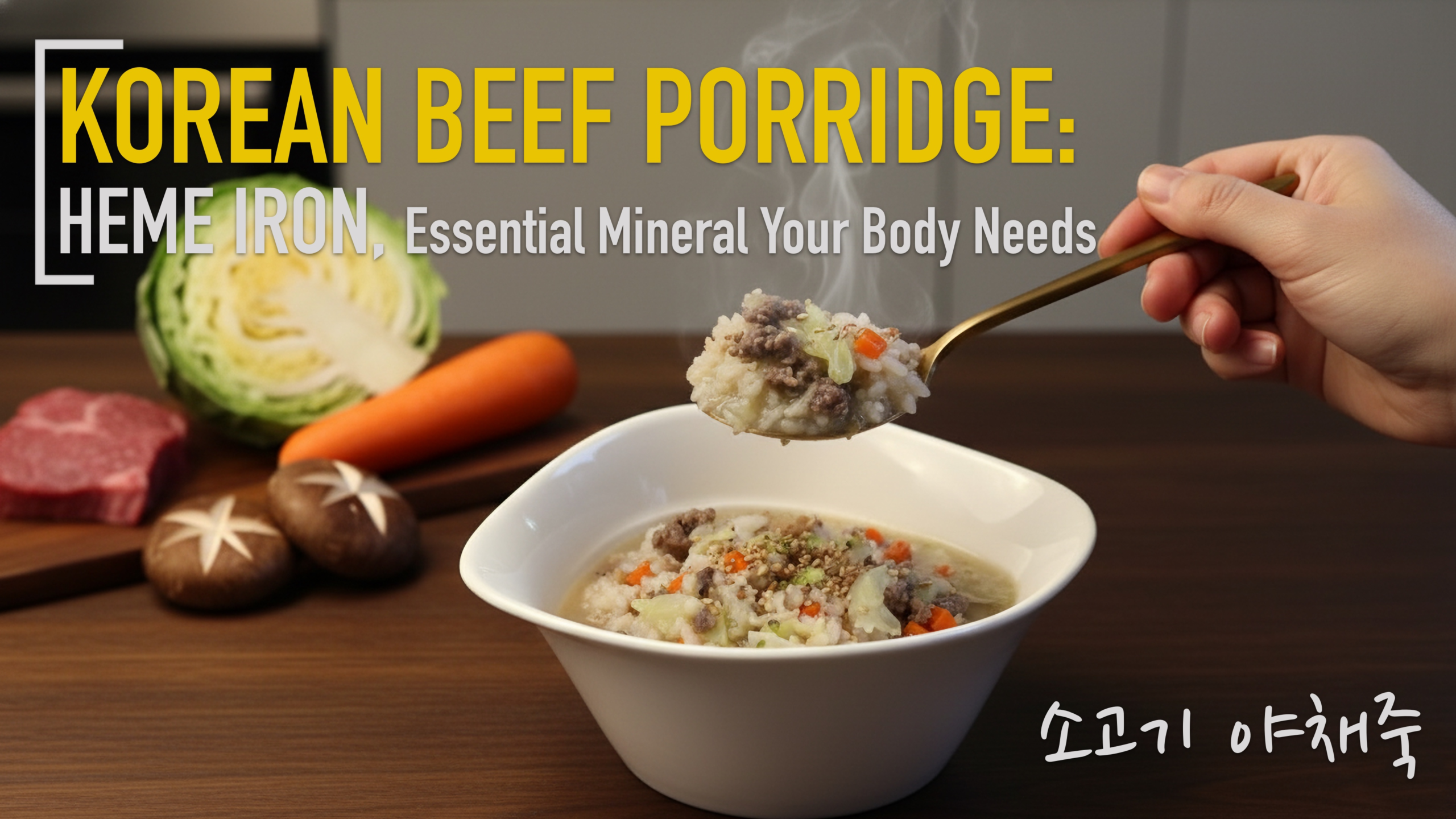
- lean beef – 120g
- pygo mushrooms – 3ea (shiitake)
- anchovy broth tablet (or make your own with anchovy, dry kelps, onion) – 3 cups
- cooked short grain rice – 200g
- carrot – 35g
- cabbage – 60g
- broccoli – 35g
- garlic cubes – 2ea
- soup soy sauce – 1 tsp
- roasted sesame seed oil – 1 tbs
- olive oil 1 tbs
- roasted sesame seeds – 1 pinch
- sojoo (rice wine) – 2 tbs
Prep & Cooking:
- Prep:
- rinse dried pygo mushroom in running water and soak in water for 15 minutes
- dice/chop carrot, broccoli, and cabbage
- chop soaked pygo mushroom
- dice beef and marinate with garlic, soup sauce, and black pepper.
- Cooking:
- Add olive oil in a small pot
- In medium high heat, add marinated beef and pygo mushrooms
- Add sojoo to remove unwanted smell and stir until beef brown with light crust
- Add 3 cups of anchovy broth or concentrated anchovy tablets
- Add pre-cooked rice and break up the clumps
- Boil in high heat until rice softens
- Turn the heat down to medium and add chopped cabbage and carrot for 2 minutes
- Add soup soy sauce
- Add broccoli and reduce the heat to low
- Closed the lid and simmer until desired
- Sprinkle some roasted sesame seeds before serving